We recently tested three off-road jacking systems: an electric jack, a High-Lift Jack, and an air jack. Here are the results…
4×4 owners are generally handy people who have no trouble changing a tyre on the side of the road. But what if you’re chassis-deep in sand or mud? What then? Is your factory-supplied bottle jack or scissor jack up to the task, or do you need something more purpose-built?
To answer these questions, we recently tested three off-road jacking systems: an electric jack, a High-Lift Jack (without dedicated jacking points), and a compact air jack.
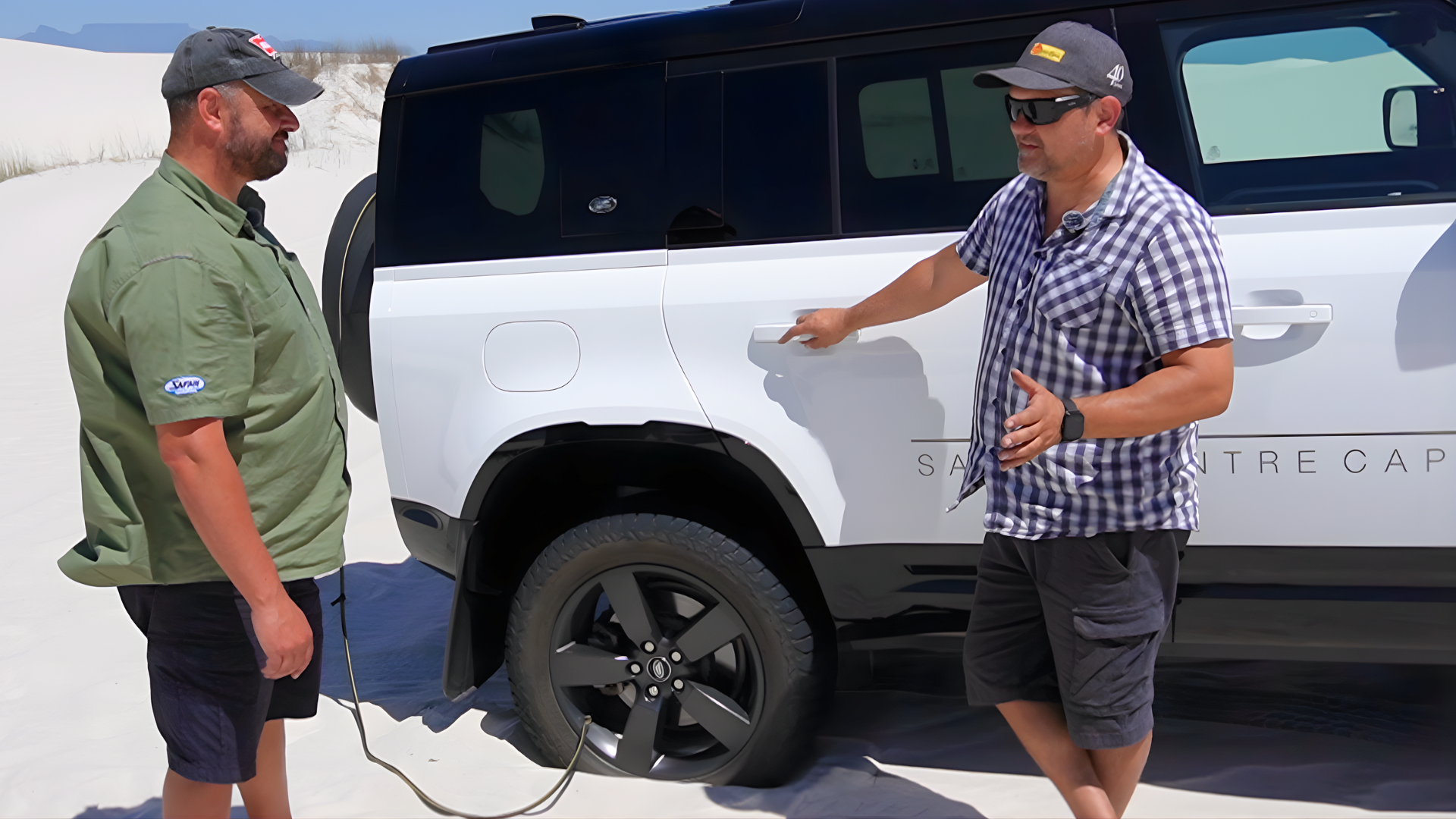
You can watch the full video below for a detailed comparison of each system, or continue reading for a quick summary.
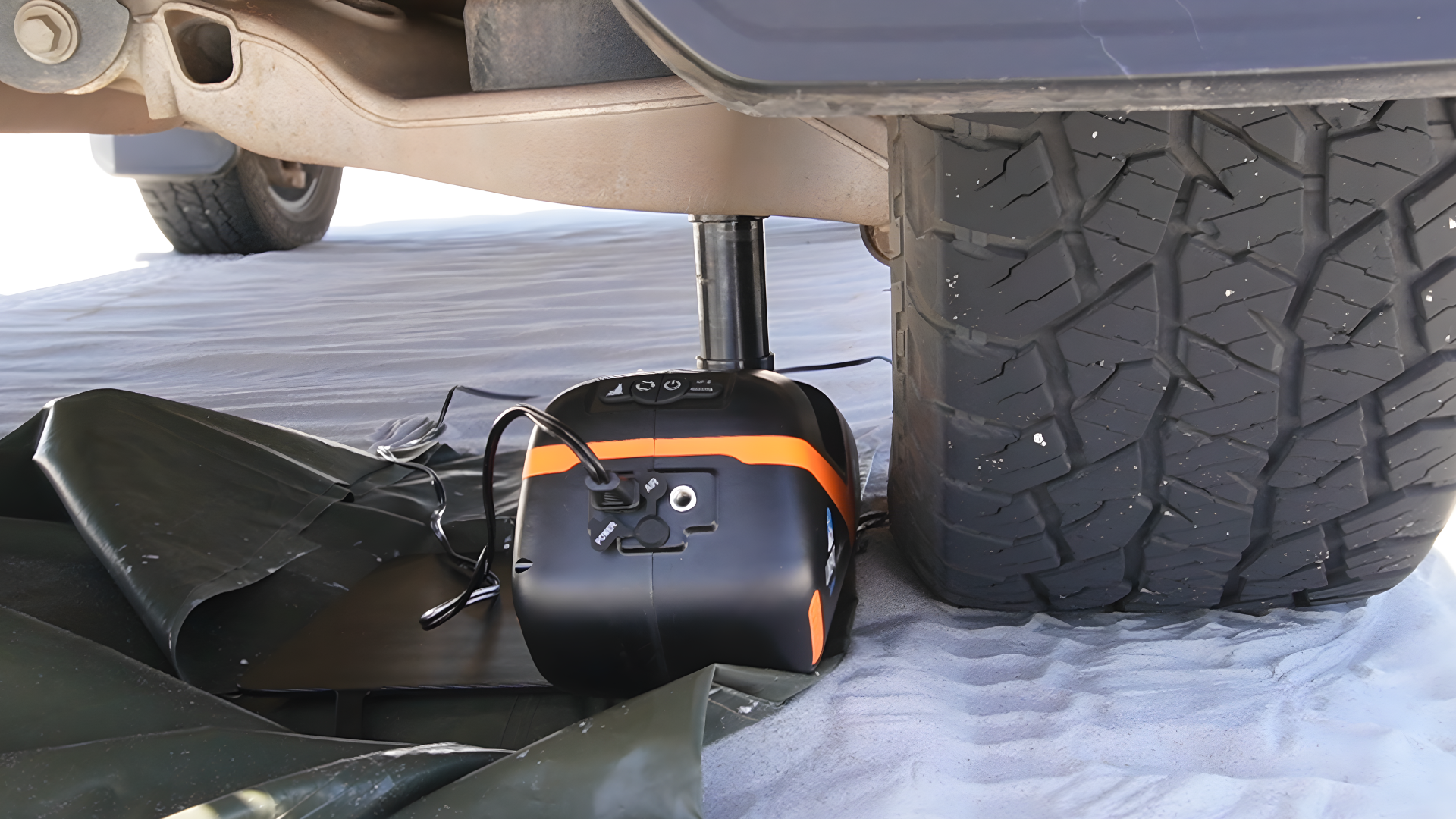
First, we tested the Lumeno Electric Jack. It functions much like a conventional bottle jack, but with significantly less sweat and dust-covered clothing. The jack plugs directly into a 12V socket, so there’s no need to open the bonnet and connect the power cable to the battery.
Additionally, it comes with a wireless remote, allowing you to stand back and observe its operation without needing to kneel or remain partially underneath the vehicle, which can be risky on uneven terrain.
Pros: Among the three lifting methods we tested, the Lumeno Electric Jack required the least experience, effort, and product knowledge. Its operation was surprisingly fast and stable, even on soft ground.
Additional bonus features include a built-in torch and air compressor. While the air compressor may not perform as well as a dedicated off-road air compressor, having it as a backup is reassuring.
Cons: The maximum lifting height may not be as high as some of the other tools we tested; however, in most situations, it should be adequate for lifting the tyre off the ground.
It’s important to note that an electric jack has limited functionality in wet conditions or on very soft terrain, where it might sink and reduce its overall lifting height.
Lastly, electrical components tend to be more prone to failure compared to purely mechanical tools like a High-Lift Jack.
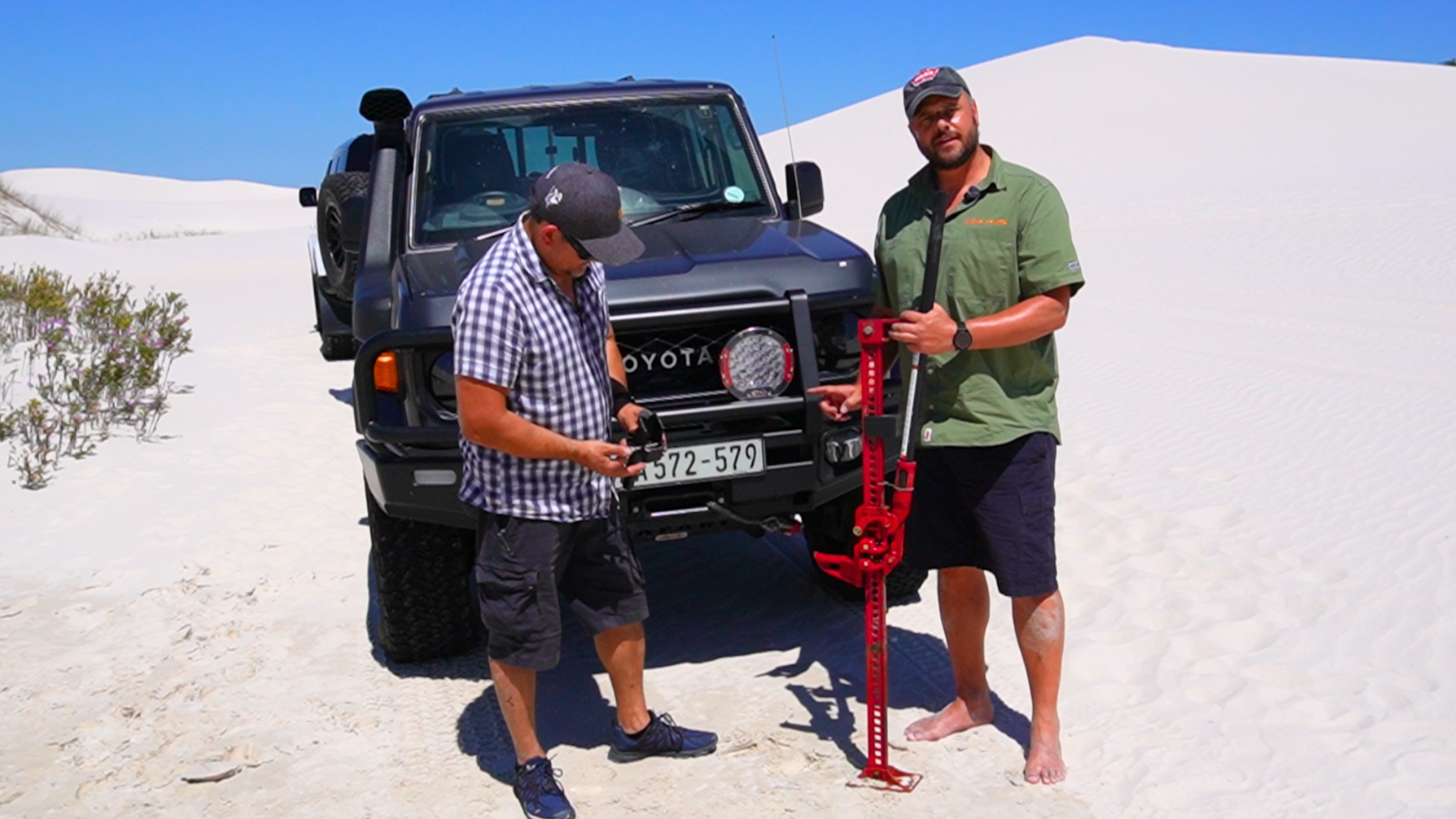
A High-Lift Jack is a versatile and reliable tool that extends well beyond simply lifting a 4×4 off the ground. A High-Lift Jack can also be used as a basic winch, to de-bead a tyre, and to lift or move trees and rocks. There are even instances where overlanders have used it as a makeshift leaf spring. However, if your vehicle doesn’t have purpose-built High-Lift jacking points on the front or rear bumper, using it as a vehicle lifting tool can be impractical.
To fully utilise the capabilities of a High-Lift Jack, you may need to invest in aftermarket bumpers and rock sliders.
In the meantime, you can consider using a Lift Mate. This accessory bolts onto the front of your High-Lift Jack and attaches to your vehicle’s rim or wheel, making it easier to lift your vehicle safely.
Pros: One advantage of using a Lift Mate is that it lifts the wheel assembly directly. This approach eliminates the need to overcome suspension travel, meaning the tyre lifts off the ground immediately when the jack is operated.
Additionally, the jack doesn’t need to rise excessively high on its ratcheting mechanism, which enhances safety in both height and stability. Another benefit of using a High-Lift jack in combination with a Lift Mate is that you’re working around the perimeter of your 4×4, rather than underneath it.
There’s just one problem…
Cons: Of course, when using a Lift Mate attachment, you cannot remove the wheel. Therefore, you’ll need a jack stand in addition to the High-Lift Jack, the Lift Mate, and likely a base plate, too.
While this may seem like a lot of equipment to transport, from a safety standpoint, it’s much safer to have a heavy 4×4 vehicle resting on a stable jack stand rather than on the jack itself.
Note: Safari Centre Cape Town offers collapsible jack stands that take up minimal space and fit easily into a drawer system.
Another consideration is that operating a High-Lift Jack requires a certain level of experience and knowledge. If you’re unfamiliar with its use, you can easily injure yourself or damage your vehicle. Watch the video above for tips on how to use a High-Lift Jack safely.
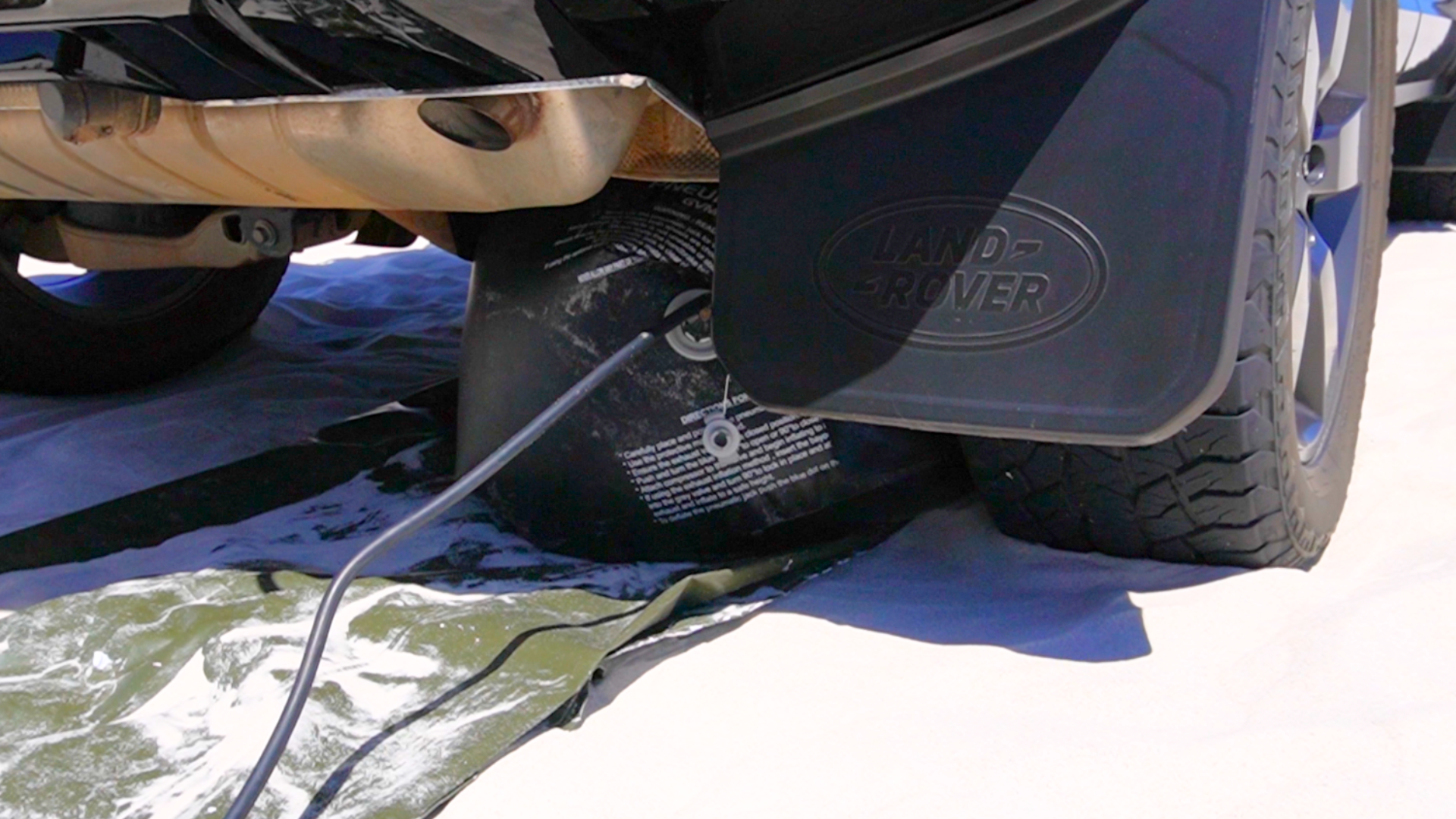
While an air jack may not be as versatile as a High-Lift, it makes up for this limitation with its convenience. Most air jacks can be inflated using either your off-road air compressor or an inflation pipe that connects to your vehicle’s exhaust system.
Using the exhaust method allows rapid inflation, but the operation typically requires two people: one to hold the pipe against the exhaust outlet and another to monitor the jack to ensure it inflates correctly.
However, this method can get quite messy, especially when deflating the jack, where exhaust residue can be an issue.
We prefer using an air compressor to inflate an air jack. Although this process is slower, it provides better control over the inflation, making it easier to shut down the operation if adjustments to the bag are needed.
Pros: An air jack is handy in muddy or waterlogged conditions, where traditional jacks are more likely to sink into the ground. They are also easy to operate, require little experience, and are relatively user-friendly. However, they do carry some risks.
Cons: While air jacks are easy to use, they require constant attention. Their flexibility can cause the bag to fold, bulge, or move into unintended areas. This may include pressing against a hot exhaust pipe or bending a delicate guard, pipe, or cable bracket under the vehicle.
That said, it’s important to note that air jacks are not suitable for every vehicle. Ensure your 4×4 has an appropriate jacking point that can accommodate an air jack, which is well clear of the exhaust and other vulnerable components.
Get the latest 4×4 guides, product reviews, off-road tips, and exclusive deals delivered straight to your inbox!