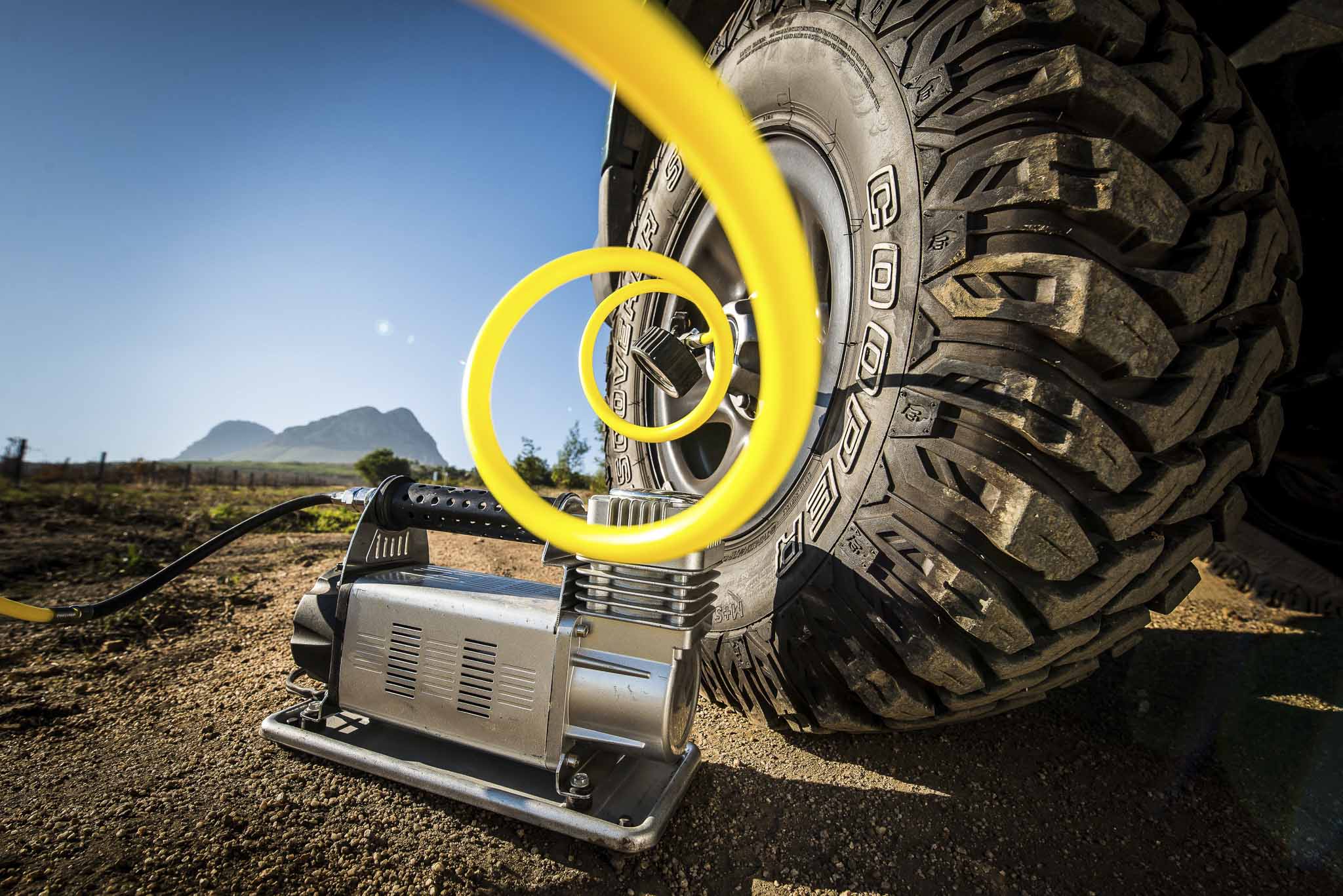
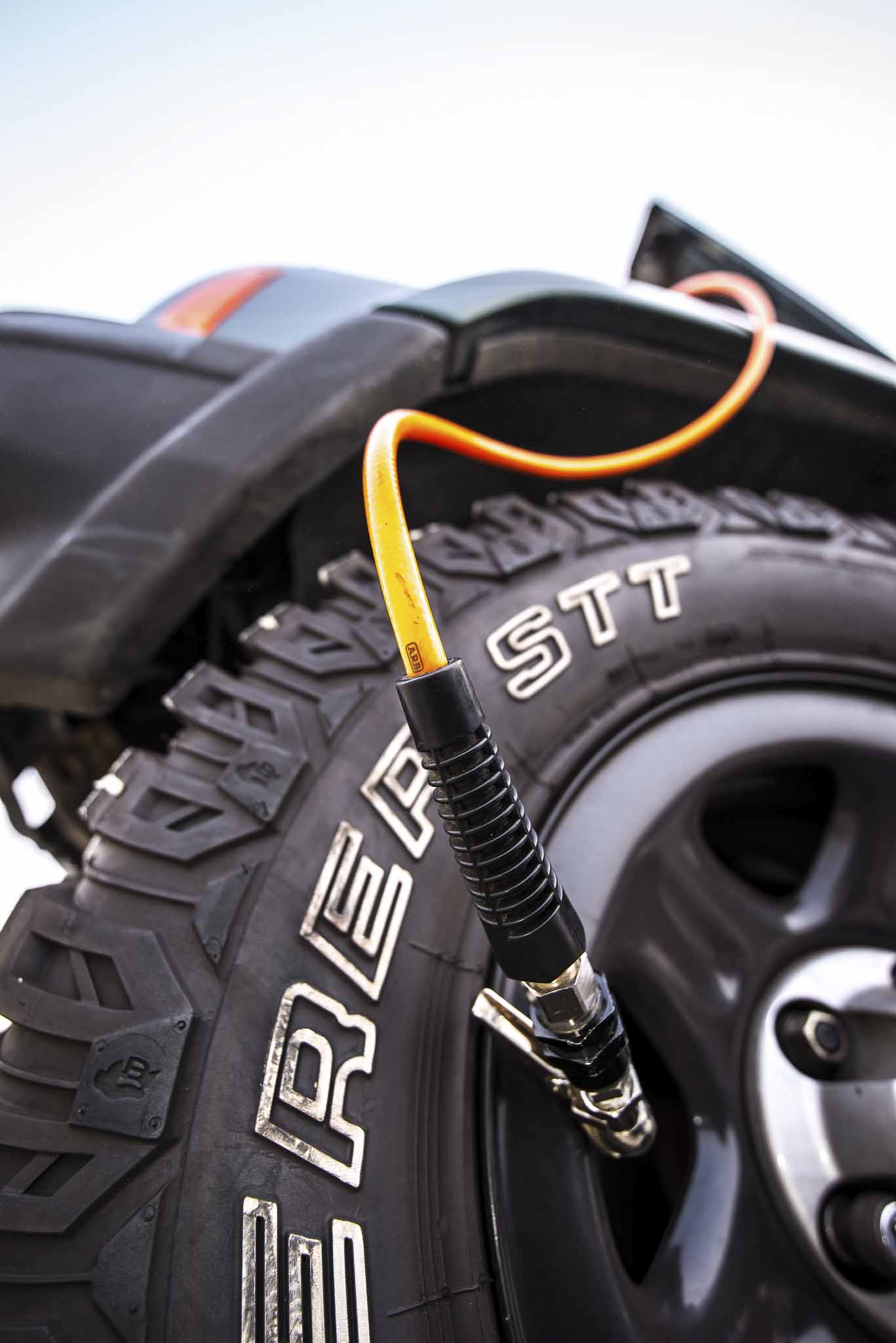
Few things have a bigger impact on off-road performance than tyre pressure. You can spend thousands on suspension upgrades, recovery gear and traction aids, but if your tyres aren’t running at the correct pressure for the terrain, you’re leaving a significant amount of traction, comfort and vehicle capability on the table.
That’s why one of the first accessories we recommend at Safari Centre Cape Town – and the one you’ll find prominently displayed at the front of our store – is a reliable 12V air compressor.
Whether you’re driving on sand, gravel, rocks or corrugated roads, lowering tyre pressures can dramatically improve traction, ride comfort and puncture resistance. The problem, of course, is that once you’re done off-road, those tyres need to be re-inflated before returning to normal road speeds.
That’s where a quality air compressor becomes an essential piece of 4×4 equipment.
But unfortunately, not all compressors are created equal, which can make the buying process a little daunting. Many first-time buyers assume that any compressor will do the job, only to discover that some units struggle to inflate large off-road tyres, overheat quickly, or simply take forever to get the job done.
Before purchasing your first compressor, here are the key factors you should consider.
Reducing tyre pressures increases the size of the tyre’s contact patch, allowing it to conform more effectively to the terrain beneath it.
The benefits include:
In many situations, simply reducing tyre pressure can deliver a greater improvement in traction than expensive aftermarket modifications. What’s more, lowering tyre pressures can dramatically improve puncture resistance in rough terrain.
However, once you’re back on hard surfaces, those tyres need to be returned to their recommended road pressures. Driving long distances – at high speeds – on under-inflated tyres creates excessive heat, increases fuel consumption, accelerates tyre wear and can permanently damage the tyre.
That’s why a dependable compressor is a must-have for any serious 4×4 owner.
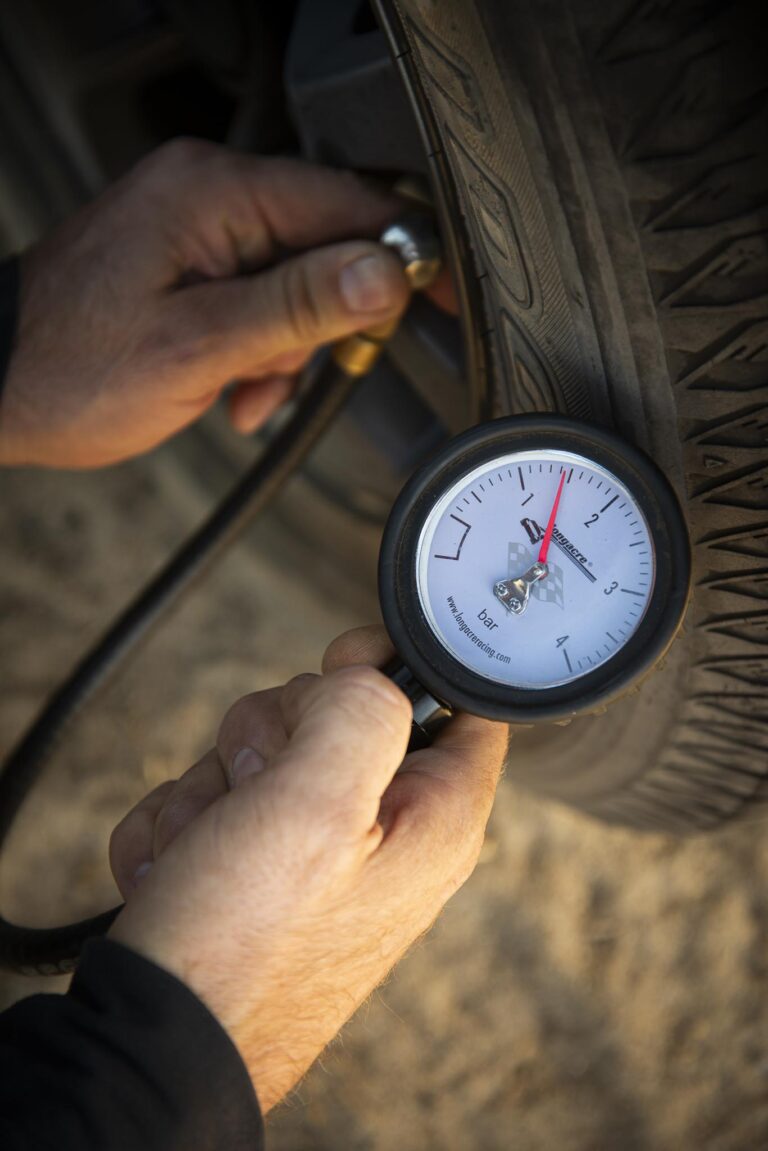
When comparing compressors, most buyers focus on airflow figures, but there’s more to the story. Two specifications matter:
Air Flow: Measured in litres per minute (L/min), airflow determines how quickly a compressor can move air. Generally speaking, higher airflow means faster tyre inflation.
Pressure: Pressure determines whether the compressor can continue delivering airflow as tyre pressure increases.
Many compressors advertise impressive airflow numbers, but those figures are often measured at zero pressure. Once tyre pressure rises, performance can drop dramatically.
A quality compressor should offer a good balance of both airflow and pressure, allowing it to inflate tyres quickly while maintaining performance under load.
This becomes especially important when dealing with larger Light Truck tyres commonly fitted to modern overlanding and touring vehicles.
One of the biggest mistakes first-time buyers make is purchasing a compressor that runs solely from a vehicle’s cigarette lighter or in-cabin 12V accessory socket.
While these units are often inexpensive, compact and convenient, they are typically limited by the amount of current that can safely be supplied through the vehicle’s accessory wiring.
As a result, they generally produce lower airflow and take considerably longer to inflate large 4×4 tyres.
For occasional emergency use, these compressors may be adequate. However, when regularly inflating off-road tyres, most 4×4 owners quickly discover their limitations

Quality off-road compressors are typically connected directly to the vehicle’s battery via heavy-duty wiring. This allows them to draw the power required to deliver meaningful airflow and inflation speeds.
A simple way to appreciate how much power a compressor requires is to listen to it while the vehicle is switched off and then again once the engine is idling. In many cases, you’ll hear the compressor speed increase noticeably once the alternator begins supplying power.
For best performance, Safari Centre recommends running your vehicle while operating a compressor. Where possible, compressors should draw power from the vehicle’s main battery, as some dual-battery charging systems can limit the power available from auxiliary batteries.
One of the most overlooked specifications is duty cycle.
Duty cycle refers to how long a compressor can operate before requiring a cooling period.
For example:
This becomes particularly important if:
Heat is the biggest enemy of compressor performance.
Compressors generate heat internally, but engine-bay-mounted units are also exposed to under-bonnet temperatures. A compressor with a poor duty cycle may struggle in these conditions and shut down prematurely.
For this reason, investing in a quality compressor often pays dividends in reliability and longevity.
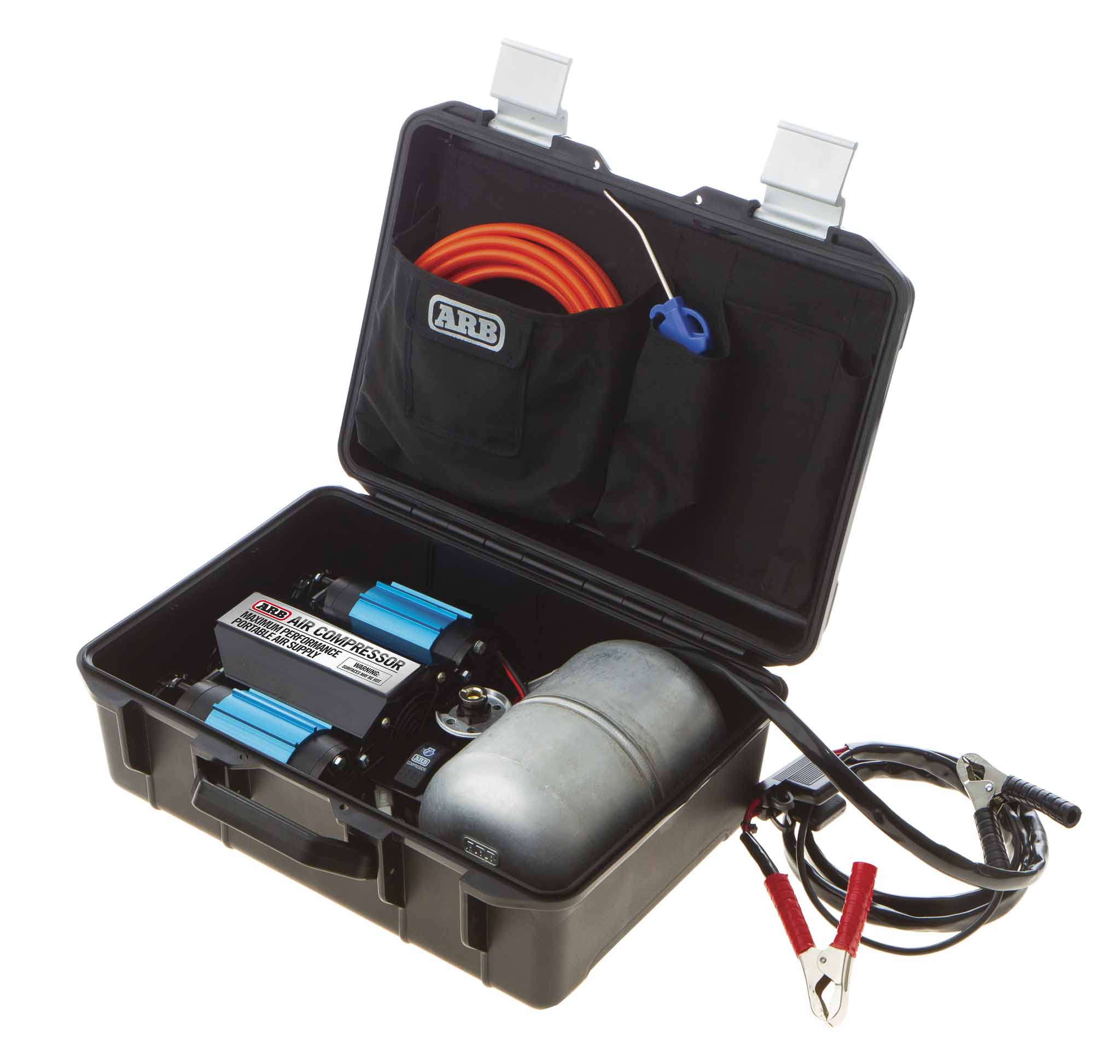
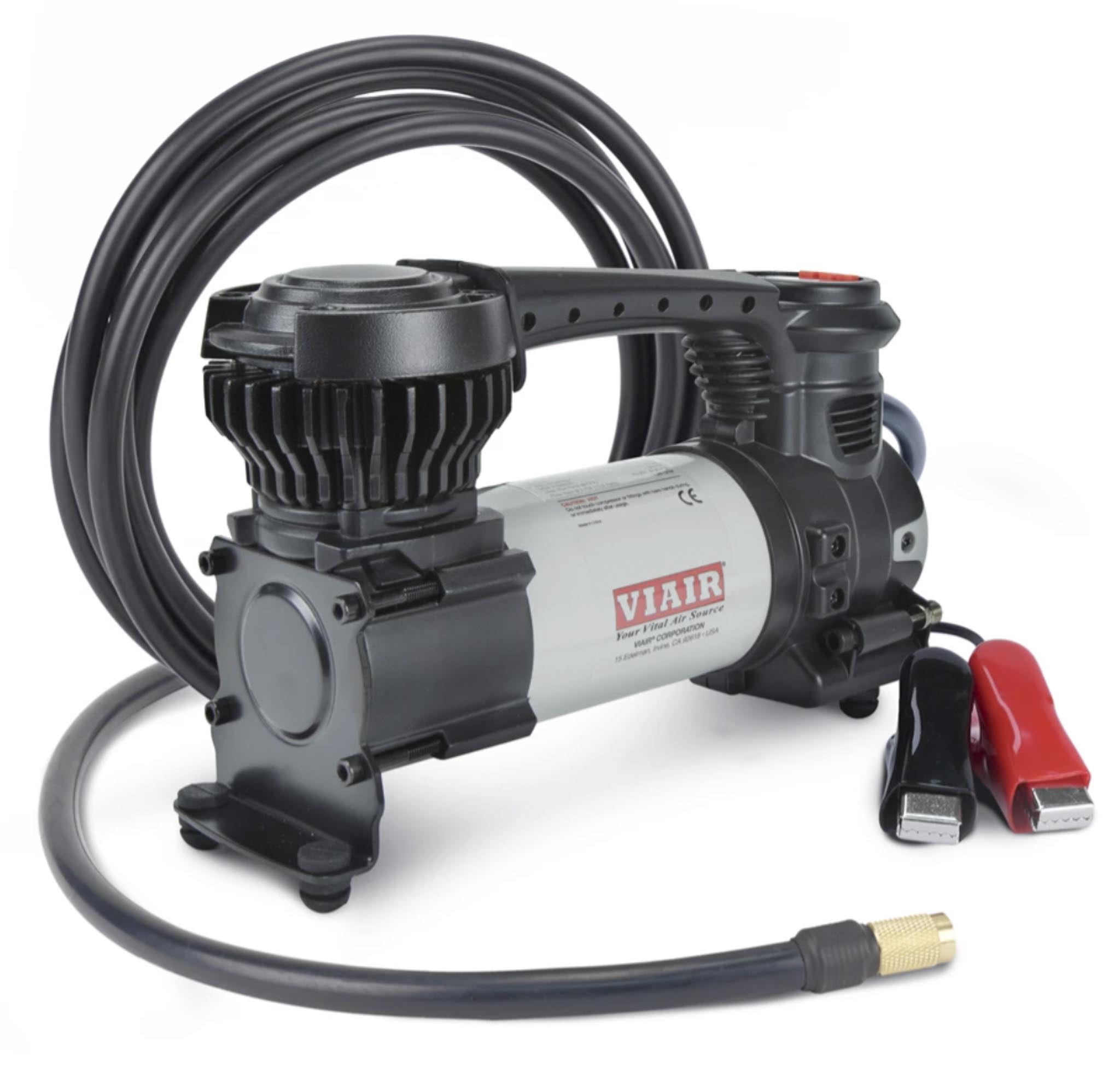
One of the most common questions we receive at Safari Centre is whether to choose a portable or permanently mounted compressor.
Portable Compressors: Portable units offer several advantages:
They’re ideal for occasional off-roaders and those who own multiple vehicles.
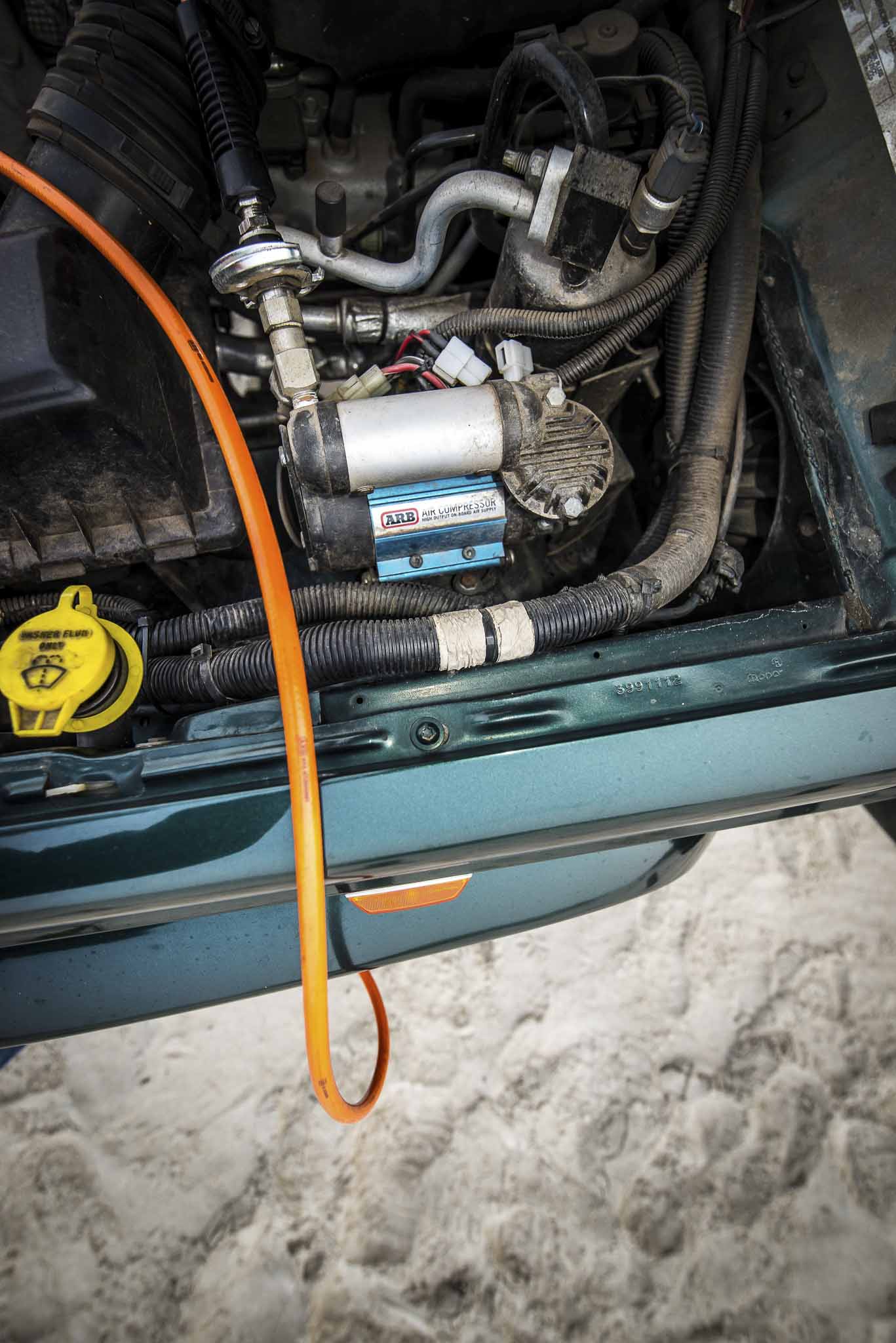
On-Board Compressors: For frequent travellers and overlanders, an on-board compressor is often the preferred option.
Benefits include:
Many 4×4 owners find that convenience alone makes an on-board compressor worthwhile. After all, if your compressor is buried beneath camping gear, you’re more likely to postpone inflating until the next fuel station – which isn’t ideal for tyre health.
Modern on-board compressors are increasingly being used as part of integrated air suspension systems. This is particularly popular among overlanders, campers and touring vehicles carrying significant loads.
With an air suspension system and in-cab controls, drivers can adjust ride height and suspension support to suit changing loads and terrain conditions. It’s an especially useful feature for vehicles fitted with rooftop tents, drawer systems, water tanks, fridges and camping equipment.
Some systems even allow owners to level their vehicle at camp, making rooftop tent camping significantly more comfortable when the ground isn’t perfectly flat. As a result, an on-board compressor can provide benefits that extend well beyond tyre inflation.
One of the most common questions we receive at Safari Centre is whether to choose a portable or permanently mounted compressor.
Portable Compressors: Portable units offer several advantages:
They’re ideal for occasional off-roaders and those who own multiple vehicles.
On-Board Compressors: For frequent travellers and overlanders, an on-board compressor is often the preferred option.
Benefits include:
Many 4×4 owners find that convenience alone makes an on-board compressor worthwhile. After all, if your compressor is buried beneath camping gear, you’re more likely to postpone inflating until the next fuel station – which isn’t ideal for tyre health.
Modern on-board compressors are increasingly being used as part of integrated air suspension systems. This is particularly popular among overlanders, campers and touring vehicles carrying significant loads.
With an air suspension system and in-cab controls, drivers can adjust ride height and suspension support to suit changing loads and terrain conditions. It’s an especially useful feature for vehicles fitted with rooftop tents, drawer systems, water tanks, fridges and camping equipment.
Some systems even allow owners to level their vehicle at camp, making rooftop tent camping significantly more comfortable when the ground isn’t perfectly flat. As a result, an on-board compressor can provide benefits that extend well beyond tyre inflation.
The answer depends largely on tyre size and vehicle use. As a general guideline:
If you’re unsure, it’s worth speaking to a 4×4 specialist who can recommend a compressor matched to your specific vehicle and requirements.
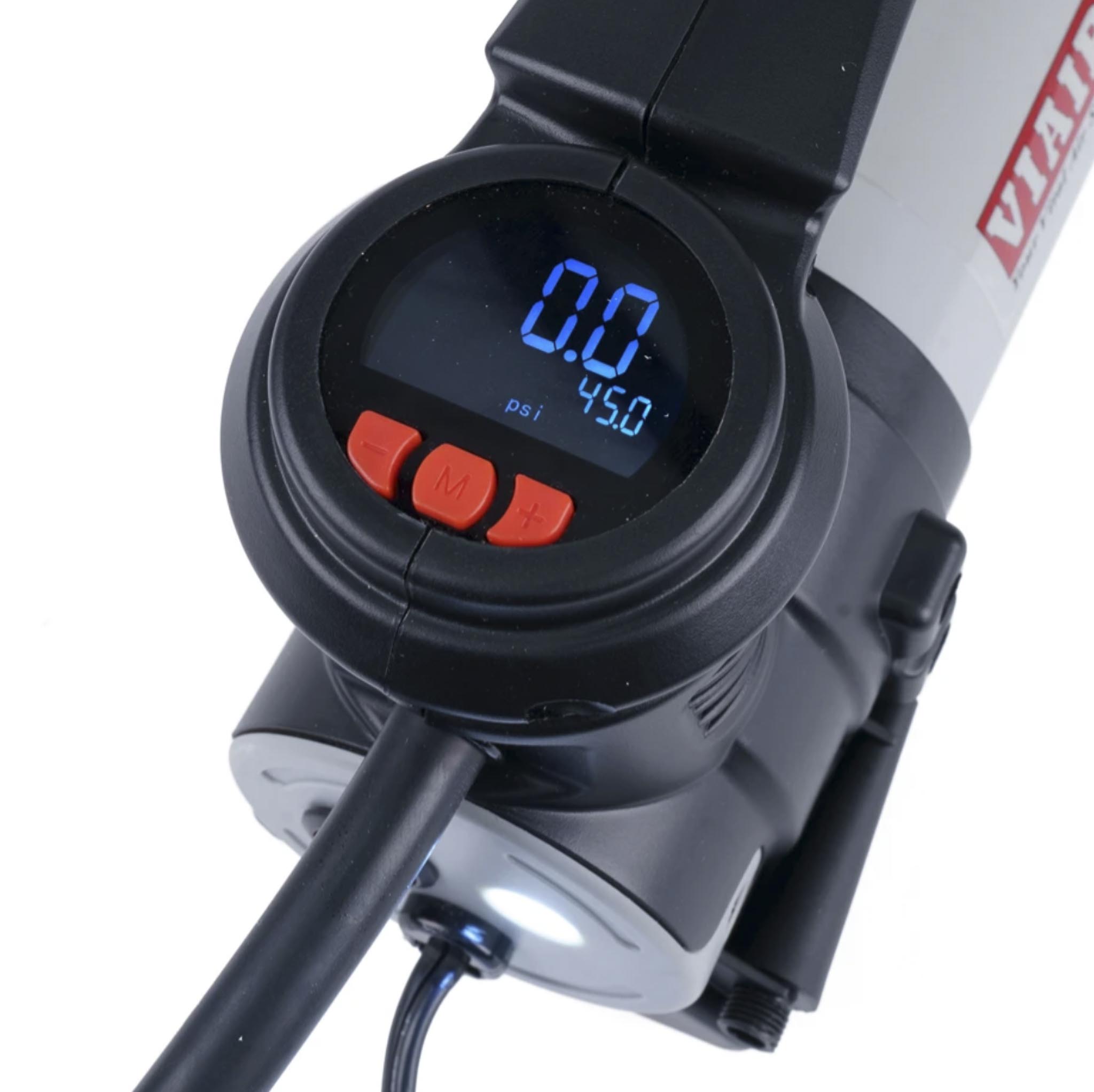
While tyre inflation is the primary reason most people buy a compressor, they can also be used for:
For many travellers, a compressor becomes one of the most frequently used accessories on every trip.
When selecting a compressor, we recommend considering:
Remember, compressor performance is determined not only by its specifications, but also by its ability to receive adequate power. A high-quality compressor connected directly to the battery will almost always outperform a lower-powered unit running through a cigarette lighter socket.
Most importantly, avoid making your decision based solely on price. A compressor is one of those accessories you’ll rely on repeatedly, often in remote locations where failure isn’t an option.
At Safari Centre Cape Town, we stock and install a range of quality 4×4 air compressors suitable for everything from weekend trail vehicles to fully equipped overlanding rigs.
Whether you’re looking for a portable unit, a permanent on-board solution, an integrated air suspension system, or simply advice on the best setup for your vehicle, our team can help you choose the right option for your needs.
Visit our Cape Town store, call (021) 595 3910, or email sales@safarict.co.za to discuss the best air compressor solution for your next adventure.
Get the latest 4×4 guides, product reviews, off-road tips, and exclusive deals delivered straight to your inbox!